Critical Thinking
Empowering individuals to question narratives and build a foundation of rational and inclusive discourse in a complex world.
A home for everyday revolutions
Come to think, unlearn and reimagine. Real freedom is the freedom of the mind.
The name Kranti Niketan draws inspiration from Rabindranath Tagore’s lifelong belief that true revolution (kranti) begins in the human mind, community, and imagination rather than on battlefields alone. Like Tagore we envision a revolution rooted in ethical awakening, self reflection and social responsibility.
Why Kranti Niketan
Our feeds are full, and our conversations are thin. Kranti Niketan is for people who feel that discomfort and want to understand it.
It is a home for curious minds and stubborn questions.
The rooms of the niketan
Niketan means a dwelling. Each room has a name in Urdu and in English, and its own way of thinking together.
Slow, shared reading. We pick a text and read it together, then question it.
Turn the page → مکالمہMuqalmaOpen talk on caste, gender, religion, nationhood and economics.
Join the conversation → تعلیمTaleemWorkshops on gender and caste sensitivity, and on how cinema, ads, music and social media shape our politics.
Start unlearning → علمIlmA shared shelf of research papers, open for anyone curious to read.
Browse the shelf → داستانDastan · SafarnamaA library of lived experience: stories of everyday resistance, told by the people who lived them.
Hear a story → حاشیہHashiyaNotes from the margins. Daily observations written down as they happen.
Read the margins → تخلیقTakhleeqA place to make things: writings, paintings, photographs, reels.
Make something → روایتRiwayatHeritage looked at closely: what we carry forward, and what we question.
Walk through →What holds the house up
Empowering individuals to question narratives and build a foundation of rational and inclusive discourse in a complex world.
Looking closely at the traditions we inherit, and asking which of them we carry forward and which we question.
Reimagining societal structures through creative vision and critical engagement with the political landscape.
Our vision
We want to change the way people perceive society, and then move from perception to action.
The name Kranti Niketan draws inspiration from Rabindranath Tagore’s lifelong belief that true revolution (kranti) begins in the human mind, community and imagination rather than on battlefields alone. Like Tagore, we envision a revolution rooted in ethical awakening, self reflection and social responsibility.
Tagore built Santiniketan and Visva-Bharati as a place where learning was open, curious and close to life. Niketan means a dwelling, and we want to be a dwelling for that kind of learning.
A place where people come to think, unlearn and reimagine, echoing Tagore’s idea that real freedom is the freedom of the mind.
Our feeds are full, and our conversations are thin. Kranti Niketan is for people who feel that discomfort and want to understand it. It is a space for those who want to:
It is a home for curious minds and stubborn questions.
Our vision
Change begins with how we see. Much of what we believe about identity, belonging, power and justice was handed to us before we could question it. Kranti Niketan starts there, with reading, listening and asking better questions, so that people can look at society with fresh eyes.
Perception becomes action when it moves from private thought to shared practice. Through reading circles, field notes, workshops, guest speakers’ lectures and conversations on our constitutional rights, we turn new understanding into small, everyday acts: how we speak, what we question, and how we show up for one another.
How we see
What we do
We begin online, and hope to grow into offline circles.
Constitutional rights
Part III of the Constitution of India guarantees six groups of Fundamental Rights. We use them as a starting point for conversation.
Equality before the law, no discrimination on grounds of religion, race, caste, sex or place of birth, equal opportunity in public employment, and the abolition of untouchability and titles.
Freedom of speech and expression, assembly, association, movement, residence and profession, along with protection in respect of conviction, life and personal liberty, and safeguards against arbitrary arrest.
A ban on trafficking and forced labour, and on employing children in factories, mines or other hazardous work.
Freedom of conscience and the right to profess, practise and propagate religion, and freedom to manage religious affairs.
Protection of the language, script and culture of minorities, and their right to establish and run educational institutions.
The right to move the Supreme Court directly when a Fundamental Right is violated.
This page is a conversation starter and a short summary. It is not legal advice.
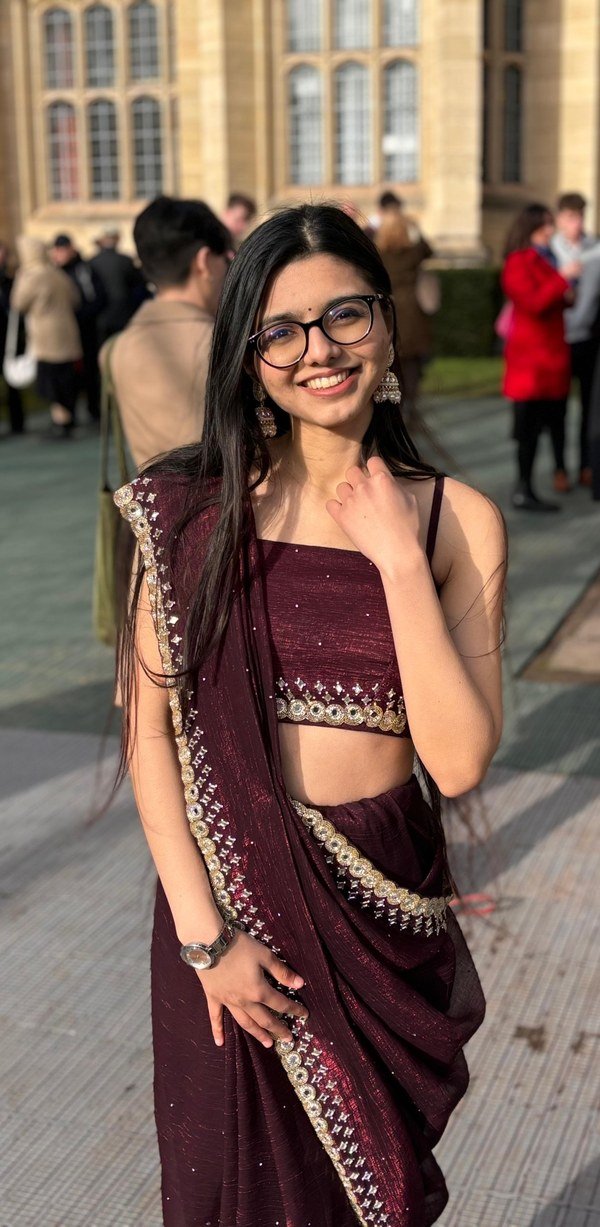
Founder
Sociologist
AlumnaUniversity of Bristol
Mithibai College, University of Mumbai
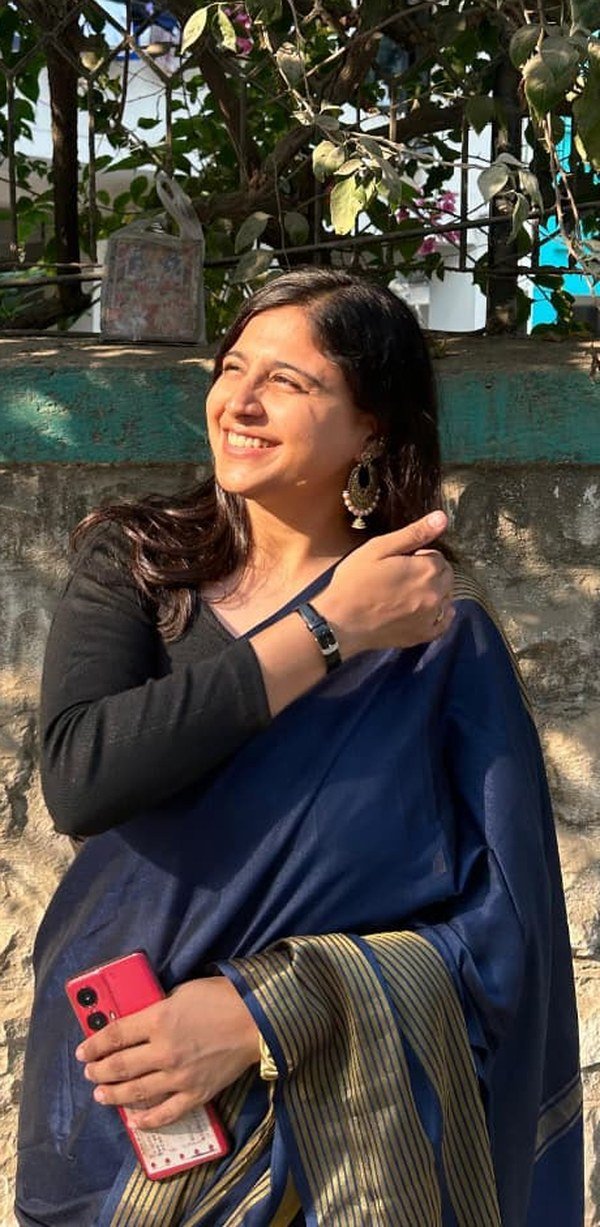
Creative Lead
Psychologist
AlumnaNanavati College, SNDT University
Mithibai College, University of Mumbai
In the founder's words
I began in psychology, curious about the mind: why we think, feel and believe what we do. But the more I listened, the more I saw that no mind forms in isolation. It is shaped by caste, class, gender, history and the stories a society tells itself. That pulled me towards sociology.
Kranti Niketan is where the two meet. It is a space to examine our own minds and the society that made them, and to imagine something better together.
Naitri Derasari, Founder
In the creative lead's words
As a psychologist, I am interested in how the stories we are given shape the way we see ourselves and each other. Those stories can be rewritten.
As Creative Lead, I want Kranti Niketan to feel warm and welcoming, so that art, writing and conversation make hard questions easier to ask.
Heer Rughani, Creative Lead
Baithak · Our gatherings
Moments from the meet-ups we have held together, and a place for you to add yours.
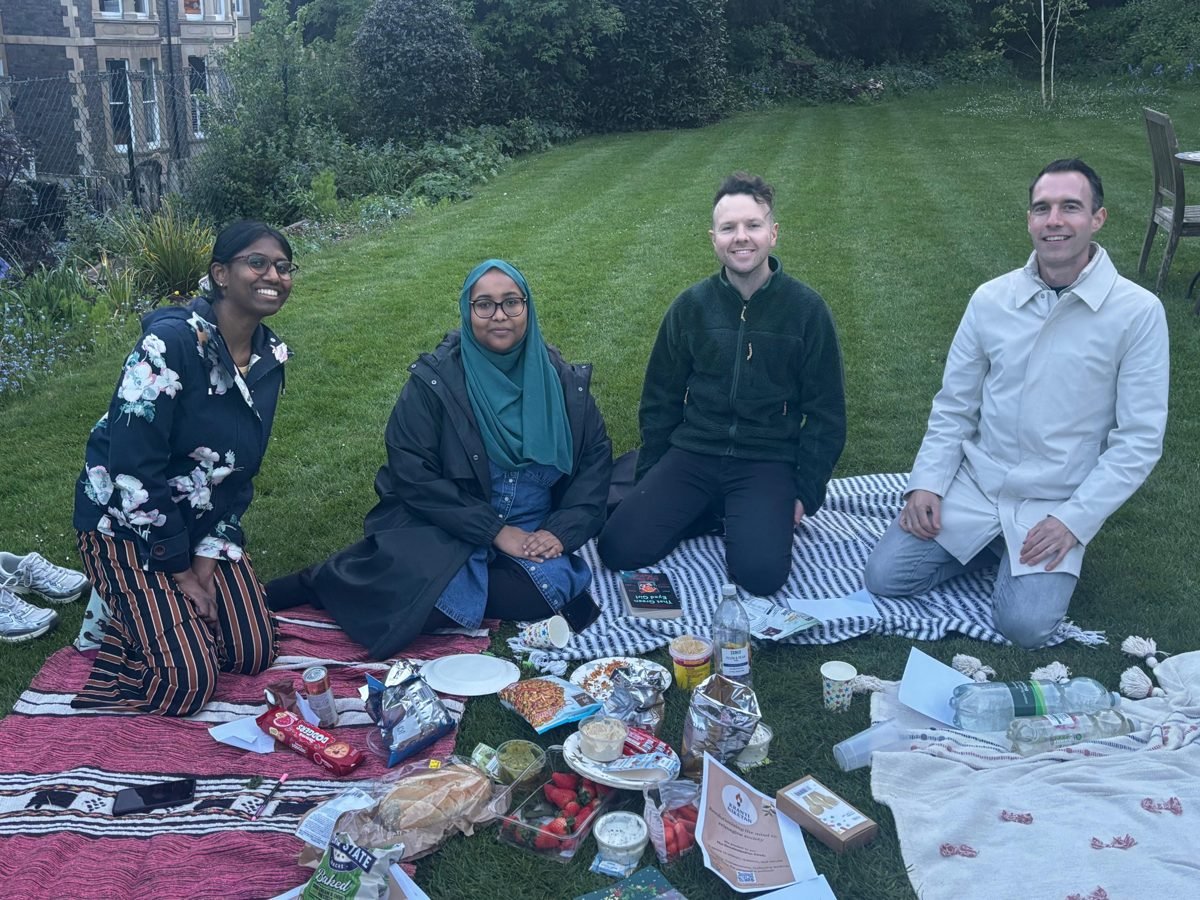
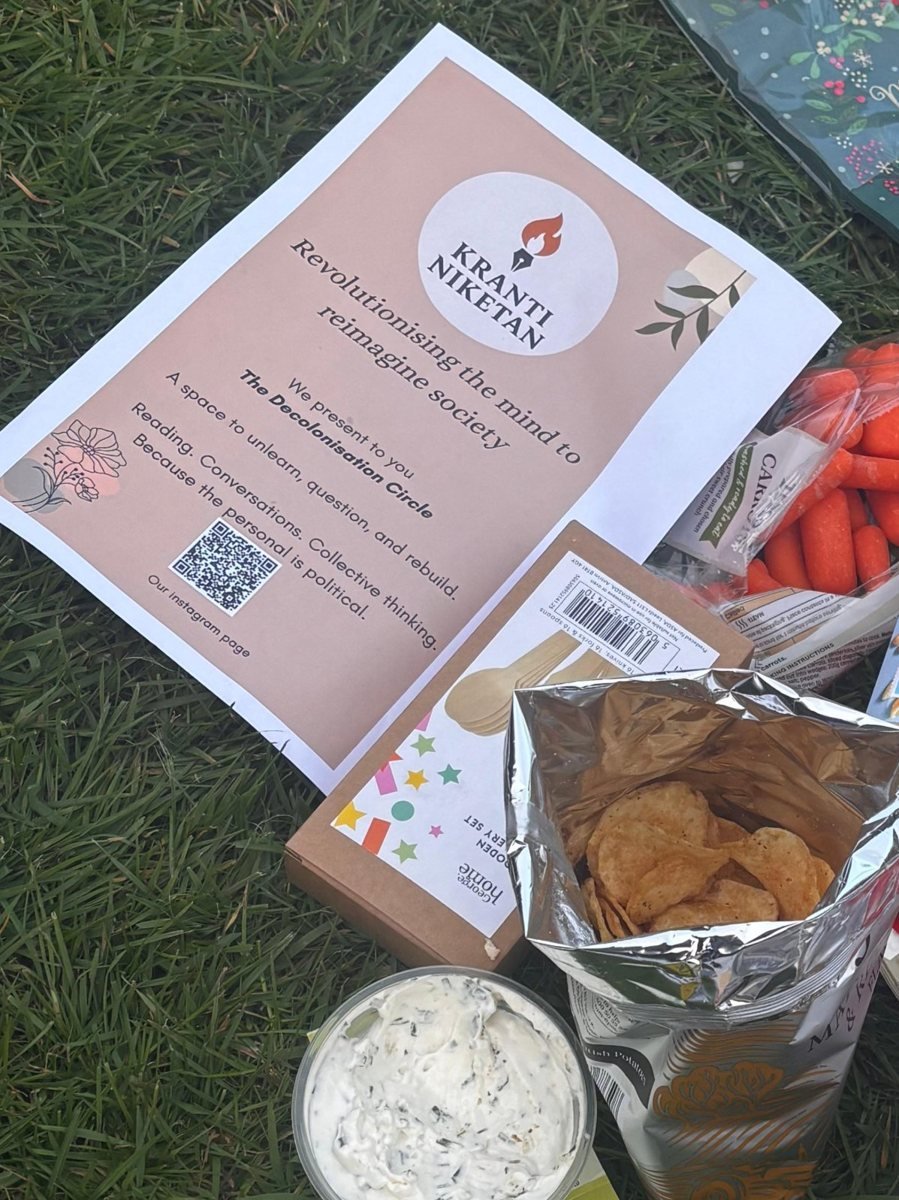
Decolonisation asks how colonial histories still shape our ideas, institutions and everyday lives, and whose knowledge we treat as universal. Over a picnic in Bristol, the Circle came together to unlearn, question and begin to rebuild, because the personal is political.
Were you at one of our meet-ups? Send us your photos with the date, the place and a line or two about the day. Please share only pictures in which everyone is comfortable being seen.
Share your photosJoin us
If you have ever felt that the world is more complicated than its hashtags, you belong here.
To volunteer or to join as a community member, write to us.
Contribute your time, skills and ideas.
Join our circles, conversations and rooms, and think along with us.
Who we are looking for
In Indian storytelling the sutradhar is the one who holds the thread and narrates the tale. Ours holds three: they keep our voice alive online with posts and reels, dig into papers, histories and ideas for the Knowledge Commons, and connect us with speakers, institutions and communities who want to think with us.
This role comes with a stipend of ₹5,000 a month. We are people who are just starting out too, so we are growing this together and keeping it simple.
Interested candidates are invited to send their CV, portfolio (if any) and a short note on why they would like to work with us to contact@krantiniketan.in; extensive experience is not required, and we welcome those who are open to learning.
In this room
The rooms are taking shape. Come and help shape them.